“Maatii qabduu?”
“Do you have any family?”
“As-tu de la famille ?”
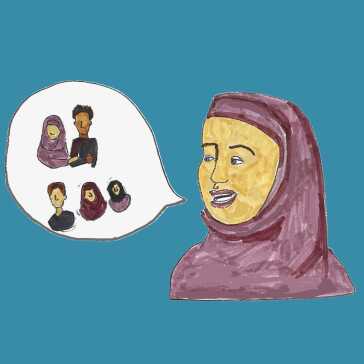
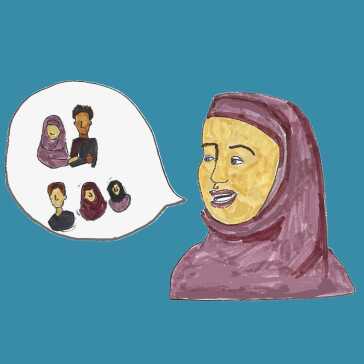
“Eeyyee, aniifi abbaan manaakoo ijoollee durbaa lamaa fi ilma tokko qabna.”
“Yes, my husband and I have two daughters and a son.”
“Oui, mon mari et moi avons deux filles et un fils.”
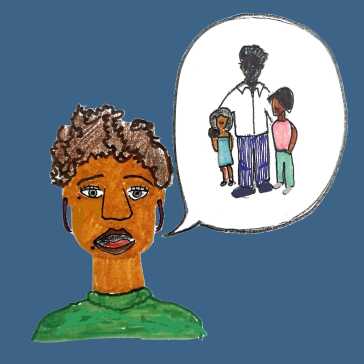
“Anis ijoollee durbaa lama qaba, garuu wal hiikneerra.”
“I also have two daughters, but I’m divorced.”
“J’ai aussi deux filles, mais je suis divorcé.”
“Ijoolleen durbaa keessan umriin isaanii meeqa?”
“How old are your daughters?”
“Quel âge ont tes filles ?”
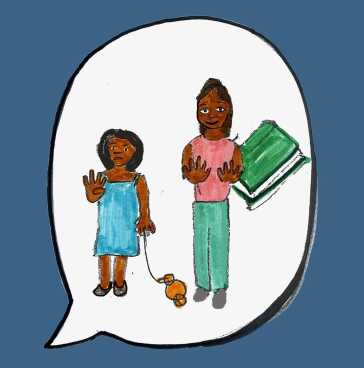
“Miinaan umriin ishee waggaa afuri. Mana barumsaa oolmaa daa’imanii deemti. Miiriyaam waggaa kudhan waan taateef mana barumsaa deemti.”
“Mina is four years old. She goes to preschool. Miriam is ten, so she goes to school.”
“Mina a quatre ans. Elle est en maternelle. Miriam a dix ans, donc elle va à l’école primaire.”
“Ijoolleen koo hundi mana barumsaa jiru. Ilmi koo bara dhufu ni eebbifama.”
“All of my children are in school. My son will graduate next year.”
“Tous mes enfants sont à l’école. Mon fils va avoir son diplôme l’année prochaine.”
“Sun waan guddaadha! Akka malee saffisaan guddatu. Booda maal gochuu barbaada?”
“That is great! They grow up so fast. What does he want to do afterwards?”
“C’est super ! Ils grandissent si vite. Qu’est-ce qu’il veut faire après ?”
“Inni hojii argachuu barbaada, garuu kanaa mannaa gara yunivarsiitii deemuu qabda jedheen.”
“He wants to get a job, but I tell him he should go to university instead.”
“Il veut travailler, mais je lui dis qu’il devrait plutôt aller à l’université.”
“Yaada gaariidha. Ijoolleen koos gaaf tokko gara yunivarsiitii akka deeman abdiin qaba.”
“That’s a good idea. I also hope my children will go to university someday.”
“C’est une bonne idée. J’espère aussi que mes enfants iront à l’université un jour.”