“¿Tienes familia?”
“Do you have any family?”
“As-tu de la famille ?”
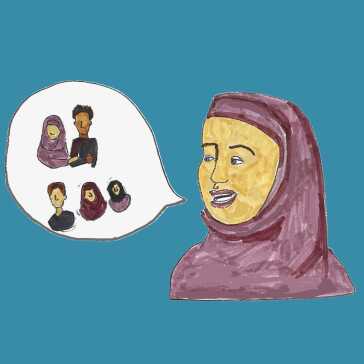
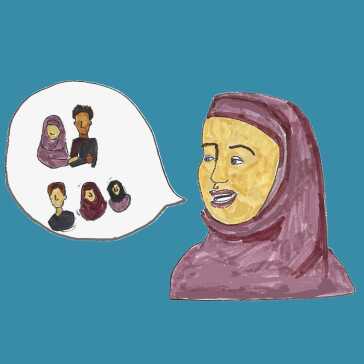
“Sí, mi esposo y yo tenemos dos hijas y un hijo”.
“Yes, my husband and I have two daughters and a son.”
“Oui, mon mari et moi avons deux filles et un fils.”
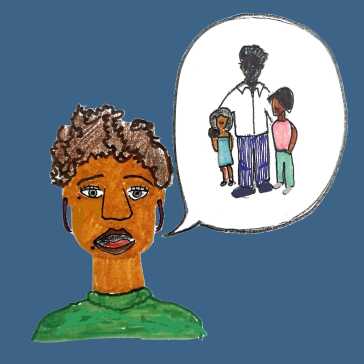
“También tengo dos hijas, pero estoy divorciada”.
“I also have two daughters, but I’m divorced.”
“J’ai aussi deux filles, mais je suis divorcé.”
“¿Qué edades tienen tus hijas?”
“How old are your daughters?”
“Quel âge ont tes filles ?”
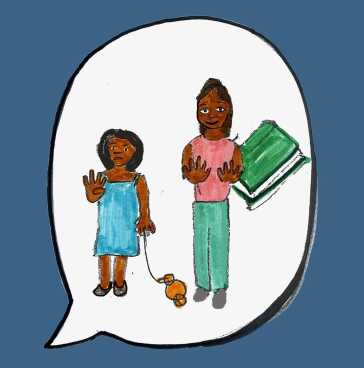
“Mina tiene cuatro años. Ella está en preescolar. Miriam tiene diez años, ella asiste a la primaria”.
“Mina is four years old. She goes to preschool. Miriam is ten, so she goes to school.”
“Mina a quatre ans. Elle est en maternelle. Miriam a dix ans, donc elle va à l’école primaire.”
“Todos mis hijos van a la secundaria. Mi hijo se graduará el próximo año”.
“All of my children are in school. My son will graduate next year.”
“Tous mes enfants sont à l’école. Mon fils va avoir son diplôme l’année prochaine.”
“¡Qué bien! Crecen tan rápido. ¿Qué quiere hacer después?”
“That is great! They grow up so fast. What does he want to do afterwards?”
“C’est super ! Ils grandissent si vite. Qu’est-ce qu’il veut faire après ?”
“Él quiere trabajar, pero yo le digo que debería ir a la universidad”.
“He wants to get a job, but I tell him he should go to university instead.”
“Il veut travailler, mais je lui dis qu’il devrait plutôt aller à l’université.”
“Es una buena idea. También espero que mis hijas vayan a la universidad algún día”.
“That’s a good idea. I also hope my children will go to university someday.”
“C’est une bonne idée. J’espère aussi que mes enfants iront à l’université un jour.”